
Last updated October 17, 2026
 Metal roofing
 Architectural shingles
 Tile roofing
 GAF
GAF Owens Corning
 Flat & low-slope
Free roof inspection with deck photos before we talk money - GAF and Owens Corning certified installation
Roofing Warning Signs: A West Palm Beach Homeowner’s Reference Guide
Most roofing warning sign guides are written for asphalt shingle roofs, unlike our Complete Guide to Roofing in West Palm Beach. Granules in the gutter, curling shingle edges, missing tabs. But drive through Flamingo Park, El Cid, or Northwood Hills and count the shingle roofs. You won’t need many fingers. West Palm Beach is a concrete tile, clay tile, and flat roof city, and the warning signs on those systems look nothing like what the generic articles describe. This guide is written for the roofs actually on West Palm Beach homes, so you can spot trouble before water finds your ceiling. You’ll learn which signs mean monitor it, which mean call a roofer this week, and how to tell a roofing problem from a plumbing or AC problem that just looks like one.
Styles & brands we work with
Quick Answer
The roof warning signs that matter most in West Palm Beach depend on your roof type. On tile roofs, look for hairline tile cracks, cracked or missing mortar at the ridge, and tiles that have slipped slightly out of alignment. On flat or low-slope roofs, watch for blistering, water that still hasn’t drained after 48 hours, and membrane pulling away at the edges. Inside, paint bubbling under eaves, a sudden jump in AC runtime, and gray staining on attic wood all point to moisture getting where it shouldn’t. The fastest way to know for sure is a roof inspection in West Palm Beach, and Brennan Roofing Co West Palm Beach provides free estimates with a written price before any work starts.
Table of Contents
- Hairline Tile Cracks: The Sign You’ll Miss at Noon
- Mortar Ridge Failure: The First Thing We See on Older Tile Roofs
- Slipped Tiles: Why They Don’t Look Slipped From the Ground
- Flat Roof Warning Signs: Blisters, Ponding, and Membrane Shrinkage
- Interior Warning Signs Every West Palm Beach Homeowner Overlooks
- Roof Leak, Plumbing Leak, or AC Condensate? How to Tell
- Monitor It vs. Call This Week: An Honest Urgency Guide
- Common Mistakes to Avoid
- When to Call a Professional
- Frequently Asked Questions
- The Bottom Line
Hairline Tile Cracks: The Sign You’ll Miss at Noon
Concrete and clay tile is the dominant roofing system in West Palm Beach. It handles hurricane winds and Florida sun better than almost anything else, but it has a weakness: hairline cracks. These are not the obvious broken tiles you can see from the street. They’re fractures thin enough to disappear in direct overhead sunlight. The best time to catch them is early morning or late afternoon, when light hits the roof at a low angle and the crack casts a thin shadow you’ll miss at noon.
Why do hairline cracks matter? Each one is a path for water. A single hairline crack won’t cause an immediate leak, but over one or two rainy seasons, water works its way through the crack, saturates the underlayment beneath the tile, and eventually rots the decking. In West Palm Beach’s climate, where afternoon thunderstorms dump an inch of rain in twenty minutes, a cracked tile in the wrong spot can put more water into your roof system than you’d think. We’ve pulled up tiles in neighborhoods like Southland Park and found soaked underlayment underneath a tile that looked fine from the curb.
Concrete tile roofs in West Palm Beach typically last 40 to 50 years, but the underlayment beneath them lasts 20 to 25. So on a 25-year-old tile roof that still looks good from the ground, the real risk isn’t the tile. It’s what’s underneath. Hairline cracks accelerate the underlayment’s decline by letting small amounts of water through year after year. If you have a concrete tile roof over 20 years old, hairline cracks are your primary early warning sign. The fix depends on how many you have: a few cracked tiles is a straightforward roof repair in West Palm Beach, while widespread cracking across multiple slopes may mean it’s time to plan for replacement.
One honest note: if you’re looking at your roof from the driveway and think you can rule out hairline cracks, you can’t. They’re rarely visible from the ground at any angle. This is why a professional inspection matters. A trained eye walking the roof sees what a binocular check from the lawn doesn’t. And nobody should walk a tile roof without knowing how to move on it; breaking more tile while looking for broken tile is a real thing we see from weekend DIY inspections.
Mortar Ridge Failure: The First Thing We See on Older Tile Roofs
Every tile roof in West Palm Beach has mortar somewhere: at the ridge caps, at the hips, and at any transition where the roof changes angle. Mortar is the grout-like material that locks ridge tiles in place, and on tile roofs over 15 years old, it’s usually the first component to fail. Not the tile. The mortar.
Here’s what mortar ridge failure looks like: cracked mortar joints running along the ridge line, chunks of mortar missing between ridge tiles, or a ridge cap that’s lifted slightly at the edge. You can often spot these from the ground without a ladder if you know to look at the ridge specifically. In West Palm Beach’s heat and humidity, mortar expands and contracts every day. Add a hurricane season or two, and the repetition of hot sun, heavy rain, and tropical storm winds eventually loosens the bond. Once mortar starts to go, ridge tiles can shift, and a shifted ridge tile in a windstorm turns into a projectile.
Mortar failure isn’t just a leak risk. It’s a wind risk. A tile roof’s first line of defense in a storm is the structural connection at the ridge and hips. When mortar deteriorates, the whole roof’s wind resistance drops. This is one area where we tell homeowners in West Palm Beach to be proactive: if you see cracked or missing mortar at the ridge, don’t wait for the next named storm to make it worse. The repair is typically less expensive than waiting for the wind to do the work for you.
For tile roof repairs involving ridge caps and mortar, the proper fix is replacing the damaged mortar, resetting the ridge tiles, and often repairing the underlayment beneath. Some roofers will just point up new mortar over the old, which looks fine for six months and fails again. We write down exactly what we’ll do and what it costs before any work starts, because a homeowner should never be guessing what they’re paying for. If you want to understand more about how tile roof repairs are priced in this market, our guide on roof repair in West Palm Beach covers it plainly.
Slipped Tiles: Why They Don’t Look Slipped From the Ground
A slipped tile is exactly what it sounds like: a tile that has moved out of its proper position. But from the street, a slipped tile often looks completely normal. The gap between it and the tile below is maybe half an inch. The tile’s shadow covers the opening at most times of day. And unless you’re looking at the roof from an upstairs window at just the right angle, you won’t see it.
What causes tiles to slip in West Palm Beach? Three things, mostly. High winds from tropical systems and summer squalls can slide a tile an inch or two even if it doesn’t break. A degraded underlayment loses its grip, letting tiles shift when the roof expands in the afternoon heat. And on older roofs, the original fastening method may simply be failing: many West Palm Beach tile roofs originally installed decades ago used fastening patterns that don’t meet current wind code standards. Slipped tiles on a post-2000 roof are usually storm-related. Slipped tiles on a 1980s roof are often a sign that the whole fastening system is reaching the end of its service life.
Here’s a step-by-step way to check for slipped tiles from an upstairs window or the sidewalk:
- Pick a clear day, low sun angle. Early morning or late afternoon works best. The shadows will reveal gaps between tiles more than harsh noon light.
- Look along each ridge line and hip line first. These are the most common places for slips to start because wind gets under the tile edges there.
- Scan the plane of the roof in a grid pattern. Move your eyes left to right, then down one row, left to right again. Look for any tile that’s out of alignment with its neighbors by more than a fraction of an inch.
- Check for exposed underlayment. If you can see black or gray material peeking out between tiles, that’s a slipped tile with a gap wide enough to let rain through.
- Take photos. A phone photo from the same spot every six months gives you a comparison point. If a tile moves between photos, you’ve got an active slip problem.
One slipped tile is a repair call. Multiple slipped tiles across different roof slopes is a signal worth investigating with a full inspection. And remember: on a tile roof, the tile is your first water barrier, but the underlayment beneath it is what actually keeps the water out. A slipped tile that lets water underneath for a year can rot decking even if you never see a drop inside. For homeowners who want a professional set of eyes, Brennan Roofing Co West Palm Beach offers inspections with written findings and a written price for any repair, always before work starts.
Flat Roof Warning Signs: Blisters, Ponding, and Membrane Shrinkage
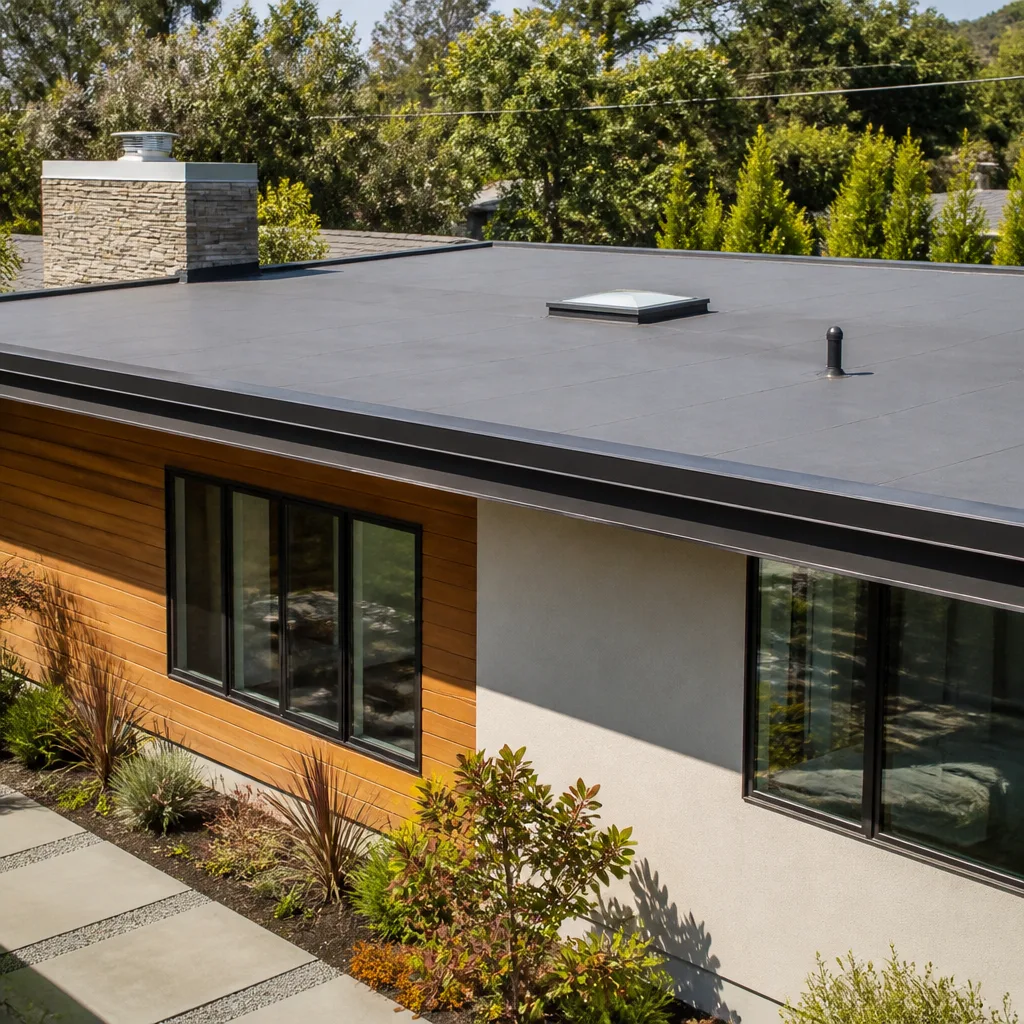
West Palm Beach has thousands of flat and low-slope roofs on older homes, particularly in neighborhoods like Grandview Heights, where mid-century construction favored flat roof designs. These are almost always membrane roofs: built-up asphalt, modified bitumen, or single-ply systems like TPO. And their warning signs are completely different from anything on a tile roof.
Three specific signs matter most on flat roofs in West Palm Beach:
- Blistering. Blisters look like raised bubbles on the membrane surface. They form when moisture or air gets trapped between the membrane layers and the Florida sun heats the roof, expanding the pocket until it pushes up. Small blisters can be stable for years. Large ones, or ones that have cracked open, are active leak points and need attention. On a hot West Palm Beach afternoon, a blistered section of membrane can be hot enough to weaken the material around it, which is why blisters often grow larger each summer.
- Standing water after 48 hours. Flat roofs are designed to drain, and in a climate with 60-plus inches of annual rainfall, drainage matters. Some water sitting for a few hours after a storm is normal on older flat roofs. Water sitting for two days or more is not. Ponding accelerates membrane deterioration, supports algae and mold growth, and adds weight stress to the roof deck. If you have a spot that never quite dries out, that’s a structural conversation, not a cosmetic one.
- Membrane shrinkage at terminations. Every flat roof ends somewhere: at a parapet wall, a scupper, an edge flashing, or a penetration. Those terminations are where the membrane is fastened and sealed. Over years of heat cycling, some membranes, particularly older ones, shrink and pull away from the edges. You’ll see it as a gap where the membrane used to meet the flashing, or a section of edge metal with visible separation. Shrinkage doesn’t just cause leaks at the edges; it pulls stress across the whole roof plane and can tear at seams.
Flat roof failure in West Palm Beach is usually progressive, not sudden. The membrane gives you signals for months or years before the leak shows up inside. The problem is that homeowners rarely look at their flat roofs, because they’re either not visible from the ground or accessible only by ladder. A yearly inspection that includes walking the flat roof surfaces catches blisters and shrinkage early, when the repair cost is a fraction of a full replacement, as covered in our Seasonal Roofing Care for West Palm Beach guide. GAF and CertainTeed both manufacture flat roof systems we install, and the difference between a quality membrane and an off-brand one becomes obvious after five or six Florida summers.
If you’re seeing any of these three signs on a flat or low-slope roof, treat it as a schedule-this-month issue. Flat roof problems compound quickly in a rainy season. A blister that’s stable in March can be a leak by July.
Interior Warning Signs Every West Palm Beach Homeowner Overlooks
Roof problems usually show up inside the house before they show up as a dramatic water stain on the living room ceiling. Here are four interior warning signs that West Palm Beach homeowners routinely miss or misread:
Paint bubbling on the underside of eaves. Soffits and eaves are the underside of the roof overhang. When roof water gets past the drip edge or behind the fascia, it travels along the overhang and soaks the soffit material. The paint starts to bubble or peel, often in a small area at first. Homeowners see peeling paint on the eave and think it’s a paint problem. It isn’t. It’s water working its way through the roof edge, and repainting won’t fix it. West Palm Beach’s humidity makes this sign appear more quickly than in a dry climate, because the moisture doesn’t evaporate; it hangs around and keeps working on the wood.
A sudden spike in AC runtime. Your air conditioner works hard in West Palm Beach no matter what, but a roof leak changes the equation. Water that gets into the attic soaks the insulation, and wet insulation loses its thermal resistance. Your attic stops holding conditioned air the way it should, the AC has to run longer to maintain the same temperature, and your FPL bill climbs. If your AC runtime jumped 20 percent or more without a change in the thermostat setting, and the outside temperature isn’t dramatically higher than last month, moisture in the attic is one of the first things we’d check. Insulation that’s been wet from a roof leak doesn’t just underperform; it compresses over time, so the efficiency loss is permanent until the insulation is replaced.
Gray discoloration on attic wood. Attic wood that has been wet, even intermittently, develops a gray or gray-black staining. It’s different from the light tan color of dry wood. This staining can mean two things: an active leak, or a past leak that has since been repaired. The way to tell the difference is to check the wood during or immediately after a hard rain. If the stained area feels damp, it’s active. If it’s dry but stained, it’s history. Either way, gray wood in an attic is the single most underrated warning sign in West Palm Beach homes, because most homeowners never go up there. We recommend taking a flashlight into the attic twice a year, once before hurricane season and once after. It takes ten minutes.
Nails that look “sweaty” or rusted in the attic. Roofing nails that penetrate through the decking into the attic should look clean. If you see rust around the nail points, moisture has been present. In West Palm Beach’s humid environment, attic condensation can cause some surface rust on improperly ventilated roofs, but heavy rust or rust on many nails across a wide area usually means roof water is getting in from above.
Roof Leak, Plumbing Leak, or AC Condensate? How to Tell
This is the question that costs West Palm Beach homeowners real money, because a water stain on the ceiling gets treated as a roof leak when it’s actually a plumbing problem, or vice versa. Same stain. Different fix. Here’s how to tell what you’re dealing with:
- Roof leaks are weather-dependent. The stain appears after rain, gets worse after rain, and stays damp while it’s raining. Between storms, it dries out. A roof leak in West Palm Beach will typically worsen during the summer wet season and fade, but not disappear, during the winter dry season. The stain will often be on an upper floor ceiling or near an exterior wall if the water is traveling down a rafter.
- Plumbing leaks are constant. If the stain grows regardless of weather, or it’s located directly below a bathroom, kitchen, or water heater, you’re looking at plumbing, not roofing. A plumbing leak doesn’t care if it rained. A running toilet or a shower pan leak will produce a stain that grows slowly but steadily, week over week, rain or shine.
- AC condensate leaks follow the AC schedule. If the stain appears or worsens during the months when your AC runs hardest, roughly April through October in West Palm Beach, and it’s located near the air handler or along the path of the condensate drain line, it’s an HVAC issue. Condensate stains tend to be smaller and more localized than roof leak stains, and they often have a slight mineral or scale ring around them.
The practical sequence we recommend: if the stain grew after a specific rain event, call a roofer. If it grew during a dry week, call a plumber. If it’s been growing all summer and you can’t tie it to rainfall, shut off the AC for an hour and see if the area stays the same; if it’s condensate, the growth will pause. What you absolutely should not do is cut open the ceiling drywall to find the source. You’ll make the job messier and more expensive, and in many West Palm Beach homes built before the 1980s, drywall mud and texture contain materials you don’t want to disturb without proper precautions.
Monitor It vs. Call This Week: An Honest Urgency Guide
Not every roof sign is an emergency. Some are “watch it and see.” Others need a call this week. Here’s our honest framework, based on what we’ve seen on hundreds of West Palm Beach roofs:
Monitor It: These Can Wait a Few Weeks
- A single hairline crack on a tile that’s otherwise intact and in place. Watch it through the next rain. If you can’t see water getting in, you have time to schedule an inspection and repair calmly.
- Minor mortar flaking at the ridge with no loose ridge tiles. If the ridge cap is still solid and the mortar is cracking but present, you have a season or two before it becomes urgent.
- A small, stable blister on a flat roof that hasn’t changed size in several months. Keep an eye on it. If it grows or cracks open, move it to the urgent list.
- Light rust on a few attic nails with no other signs of moisture. This could be decades-old condensation, not an active leak.
Call This Week: These Are Escalating Problems
- Any slipped tile with exposed underlayment beneath it. That’s an active water path, and the next thunderstorm will use it.
- Standing water on a flat roof that remains after 48 hours. The longer it ponds, the more damage it does to the membrane and decking.
- Cracked or open blisters on a flat roof. An open blister is a leak that’s already happening.
- Bulging or sagging ceiling drywall anywhere in the house, especially after recent rain. That means water is pooling above the drywall and the drywall is losing its structural integrity.
- Water actively dripping inside the house during or immediately after a storm. This is an active leak. It needs professional attention on the next available schedule, not next month.
This framework isn’t about scaring anyone into a premature replacement. It’s about timing. In West Palm Beach, the difference between a $400 roof repair and a $4,000 repair is often just time. Address the issue when it’s on the monitor list, and you’ll usually avoid the urgent list entirely. The Brennan Roofing Co West Palm Beach home page has more on how we approach repairs at each stage.
Common Mistakes to Avoid
- Using a generic national roofing checklist. Warning signs for an asphalt shingle roof in Ohio don’t apply to a concrete tile roof in West Palm Beach. Use a guide written for your actual roof type, not a one-size-fits-all version.
- Ignoring the flat roof because it’s out of sight. On many West Palm Beach homes, the flat roof is on the back or side of the house where no one ever looks at it. Out of sight is where flat roofs fail.
- Repainting peeling soffit paint without finding the water source. The paint will peel again in six months because the water is still there. Fix the roof edge first.
- Assuming a ceiling stain is a roof leak without checking the weather correlation. If the stain grows during dry weeks, you don’t need a roofer. You need a plumber or an HVAC tech.
- Climbing onto a tile roof to inspect it yourself. Tile roofs are easy to damage if you don’t know how to walk them. One wrong step creates the very problem you were trying to find.
- Putting off a mortar ridge repair because it looks minor. In West Palm Beach, minor ridge mortar issues become major wind failures during hurricane season. The repair is always cheaper before the storm.
- Assuming a 30-year-old tile roof is fine because the tile looks good. The underlayment beneath it has a shorter lifespan than the tile. The tile can look perfect while the real waterproofing layer fails underneath.
When to Call a Professional
If you’ve found a slipped tile with exposed underlayment, cracked blisters on a flat roof, water actively entering the house, or a ceiling stain that grows during rain, call a roofer this week. If your roof is over 15 years old and you’ve never had it inspected, the fact that you haven’t found signs doesn’t mean they aren’t there. Hairline cracks and membrane shrinkage don’t announce themselves. A professional inspection finds them before the rain does. Brennan Roofing Co West Palm Beach offers free estimates with a written price in hand before any work starts, and every job is backed by the 365-Day Done Right Promise: if it’s not done right, we make it right, in writing, at no charge. Call (728) 203-3066 to schedule your free estimate.
Frequently Asked Questions
The most common roof warning signs in West Palm Beach are hairline cracks in concrete tile, cracked or missing mortar at ridge lines, slipped tiles, blisters and ponding water on flat roofs, and interior signs like bubbling soffit paint, a jump in AC runtime, or gray staining on attic wood. The signs vary by roof type, which is why a generic checklist often misses the problem. If you spot any of these, call (728) 203-3066 for a free estimate and a written price before any work begins.
Roof repair costs in West Palm Beach vary by the issue and the roof type. A few cracked or slipped tiles typically ranges from $300 to $800 depending on access and how many tiles need resetting. Mortar ridge repair on a tile roof usually falls between $500 and $1,500 depending on the ridge length. Flat roof blister repairs and edge termination resealing typically range from $400 to $1,200 per area. Extensive underlayment replacement on an older tile roof can run $8,000 to $18,000 depending on the square footage. The exact price should be written down before the work starts; call (728) 203-3066 and we’ll put a number on paper for you, free of charge.
Track whether the stain grows after rain. If it appears or worsens during or immediately after storms, it’s likely a roof leak. If it grows steadily during dry weather, it’s plumbing. If it grows during summer when the AC runs constantly, it may be condensate. Weather correlation is the quickest diagnostic tool you have. Once you know which system is causing it, call the right professional. If it’s the roof, call (728) 203-3066 for a free estimate.
A single hairline crack is usually a slow-developing issue, but it is a real problem over time. Water enters through the crack, reaches the underlayment, and accelerates its deterioration. In West Palm Beach’s rain patterns, a cracked tile can introduce water repeatedly over several years. We recommend repairing the cracked tile when you find it, not waiting for it to widen. The repair is straightforward and inexpensive compared to decking replacement down the line.
A roof should be inspected once a year in West Palm Beach, ideally before hurricane season which runs from June through November. Flat roofs benefit from a check twice a year because membrane issues develop faster. After any named storm passes close enough to bring sustained winds over about 40 mph, an inspection is worth scheduling even if the roof looks fine from the ground. Roof inspection in West Palm Beach through Brennan Roofing includes a written report of what we found, with photos and a specific repair price if anything needs work.
Yes, roof repairs are done year-round in West Palm Beach, including during hurricane season. The summer months bring afternoon thunderstorms, but crews work between weather windows and prioritize active leaks and storm-vulnerable conditions like loose ridge caps. If you have a problem in June, we’d rather repair it than wait for a September storm to make it worse. Call (728) 203-3066 and a live person will answer, any time, day or night.
The Bottom Line
Roof warning signs on a West Palm Beach home don’t look like the ones in generic online guides. Tile roofs tell you they’re failing through hairline cracks, ridge mortar deterioration, and tiles that shift by inches. Flat roofs signal through blisters, ponding, and membrane shrinkage. Inside the house, bubbling eaves, higher AC bills, and gray attic wood are the quiet indicators most homeowners miss. The value of knowing the right signs is timing: every roof problem is cheaper to fix early, and in West Palm Beach’s climate, problems move from small to structural faster than in most of the country. If any of the signs in this guide sound familiar, get a professional set of eyes on it, and explore our more guides & resources for West Palm Beach homeowners. The estimate is free, the price is written before work starts, and the guarantee is in writing for a full year.
Written by Travis Oakley, Owner at Brennan Roofing Co West Palm Beach, serving West Palm Beach since 2000.
See the difference
 Before
 After
After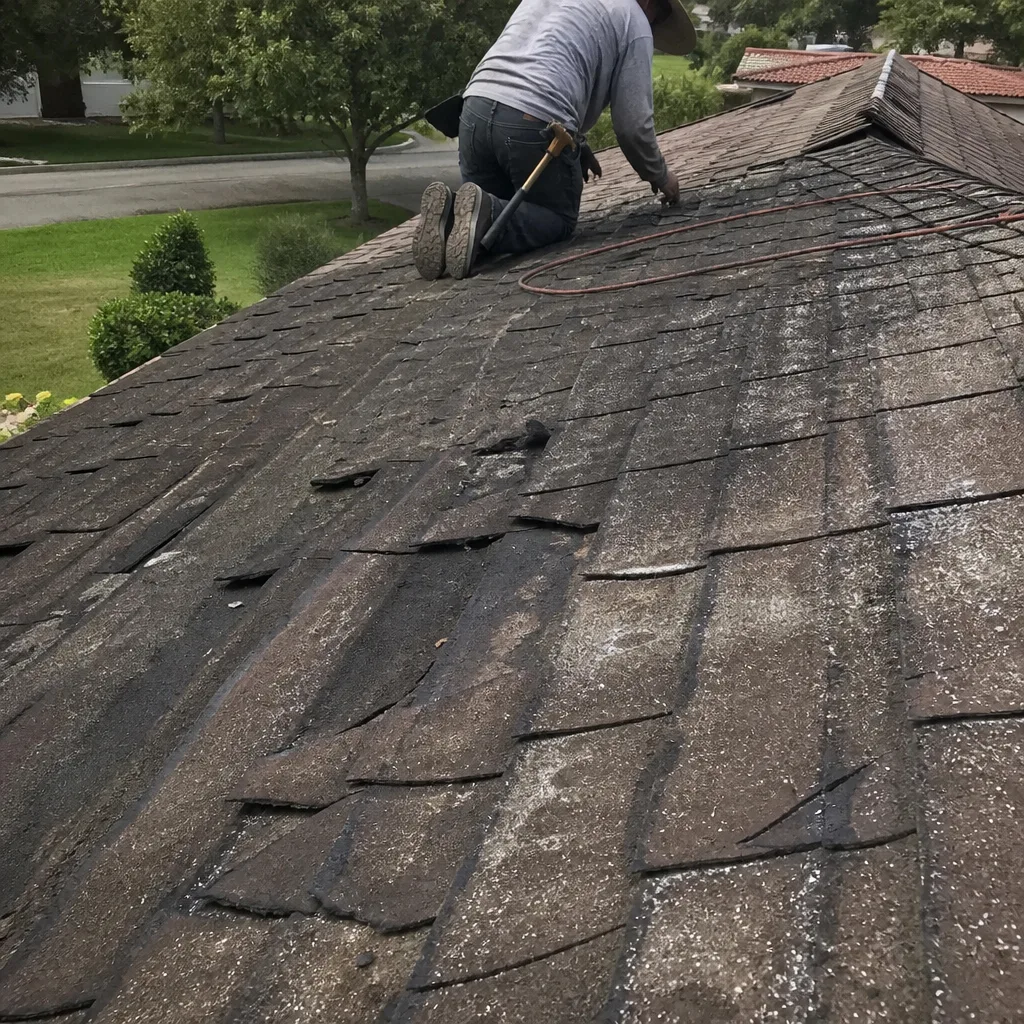 Before
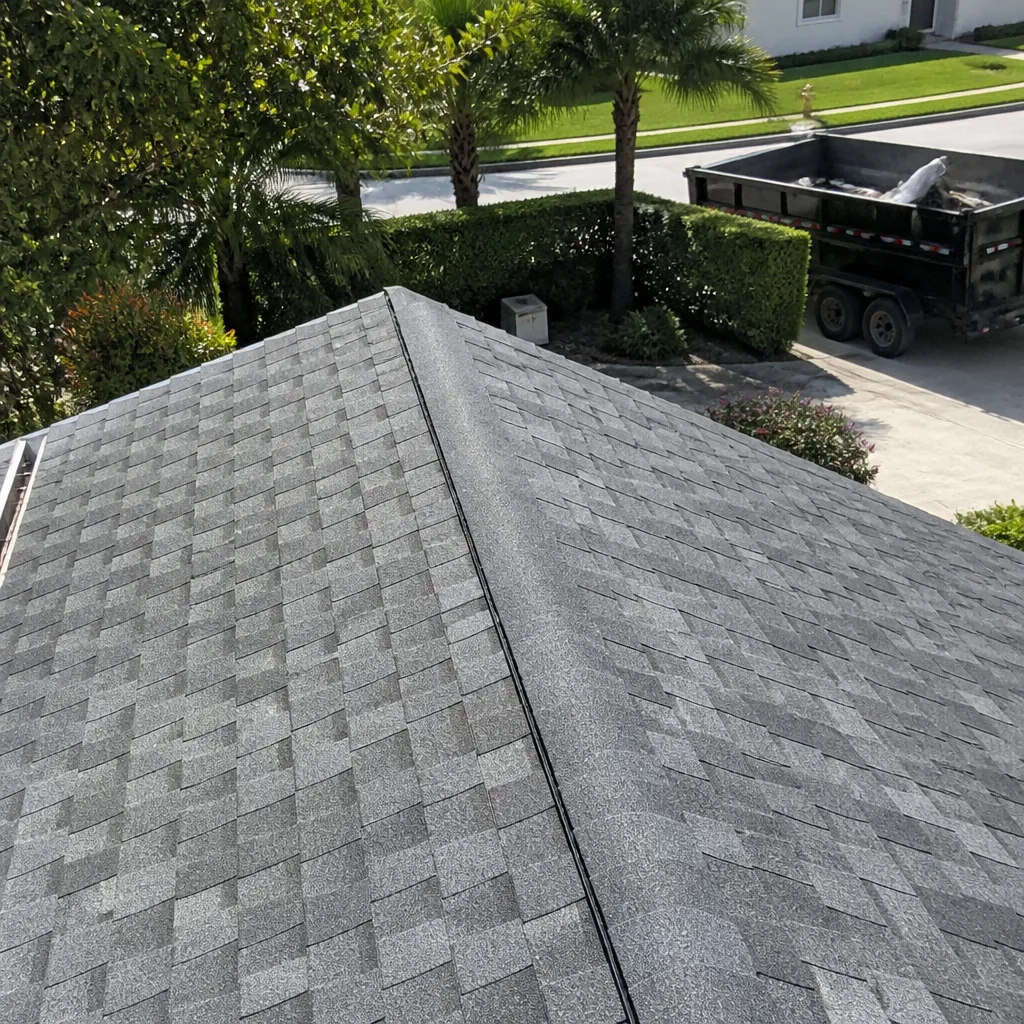 After
After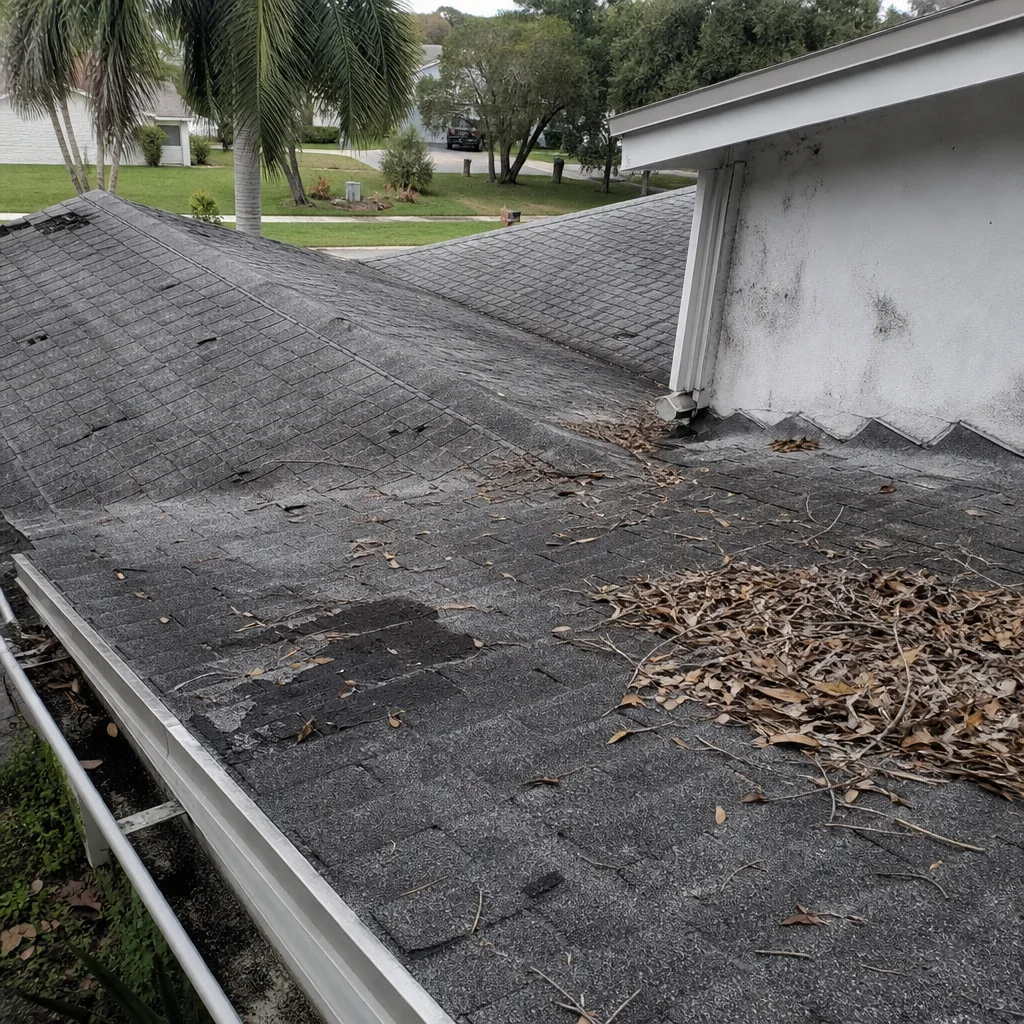 Before
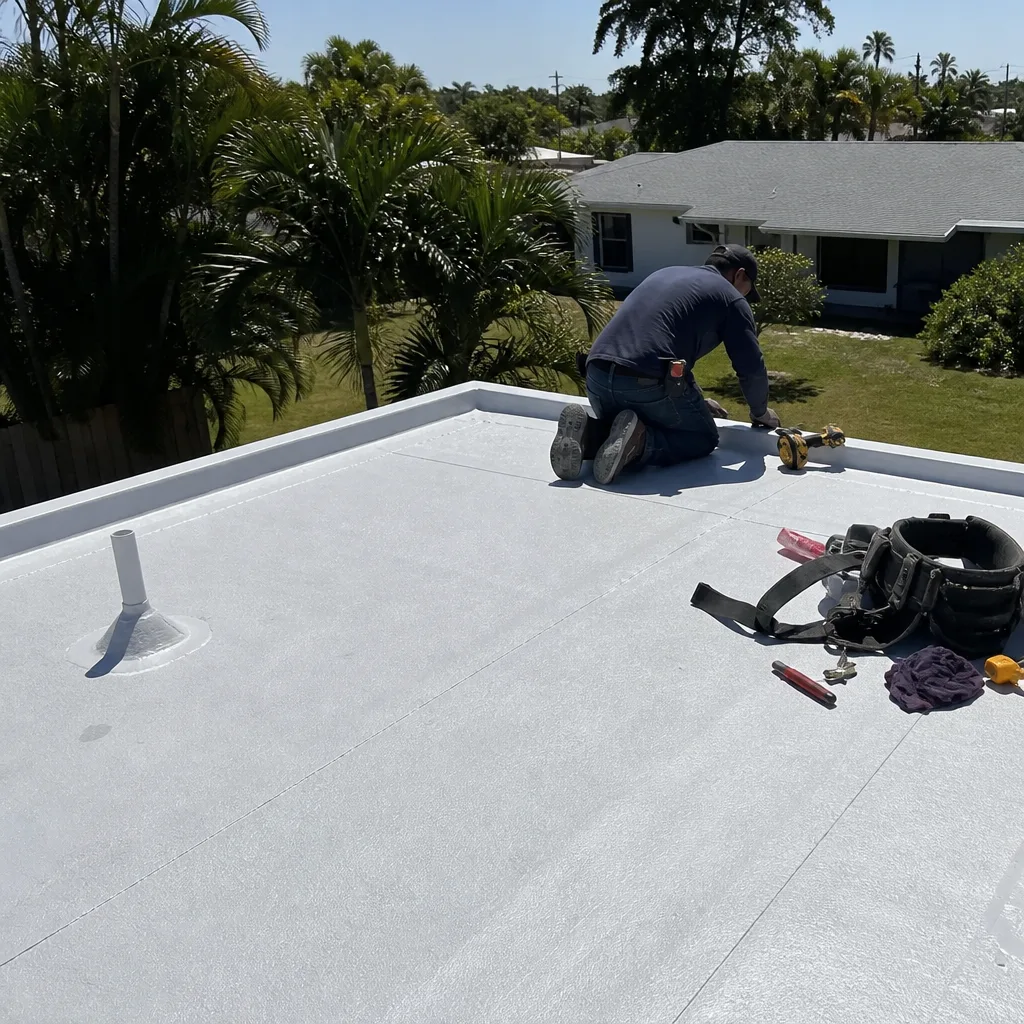 After
After