
Last updated October 17, 2026
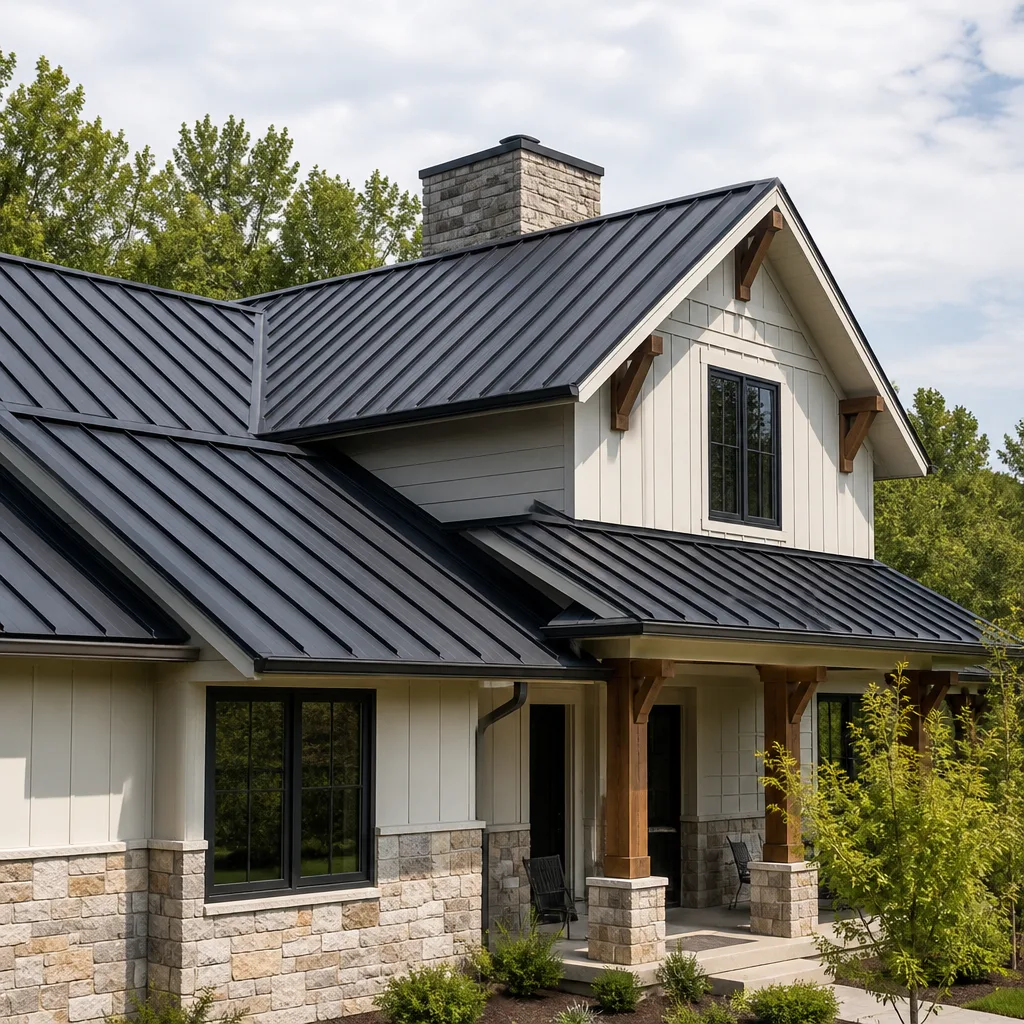 Metal roofing
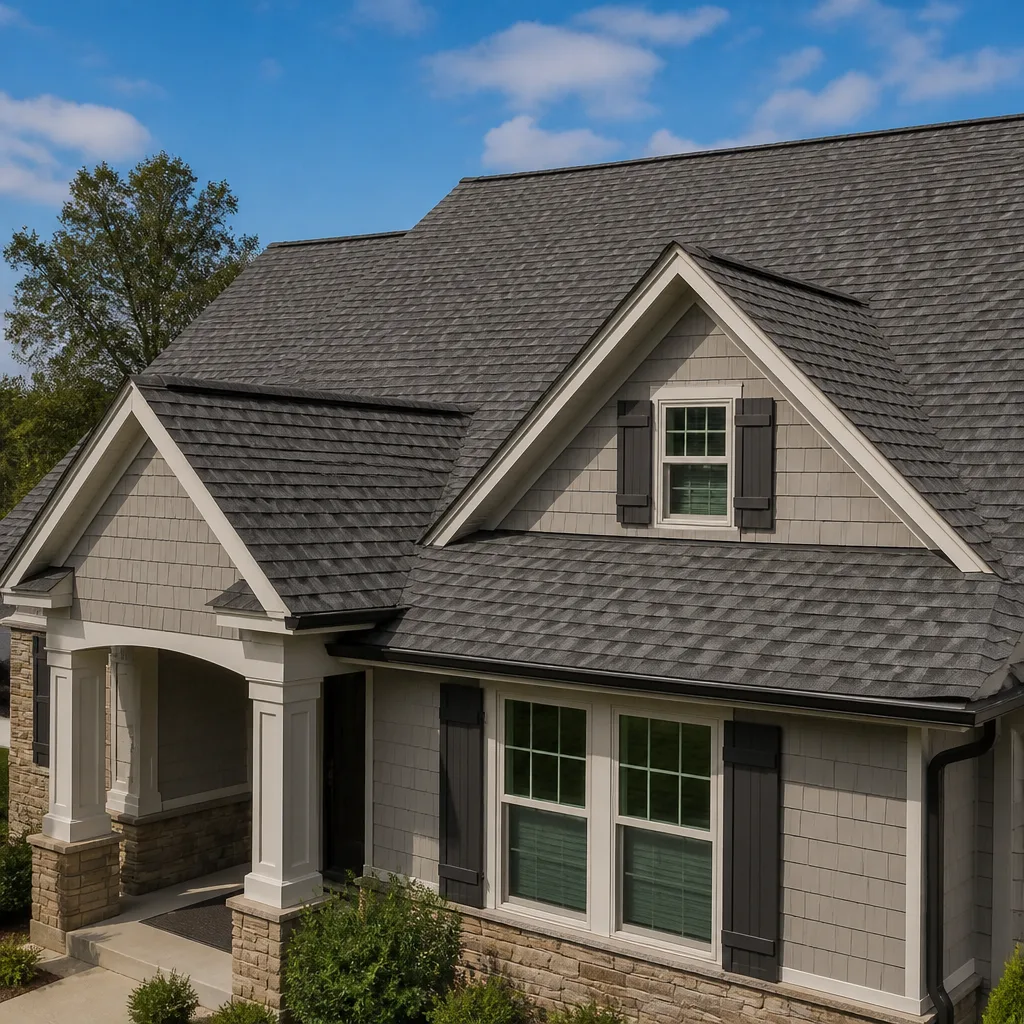 Architectural shingles
 Tile roofing
 GAF
GAF Owens Corning
 Flat & low-slope
Free roof inspection with deck photos before we talk money - GAF and Owens Corning certified installation
Seasonal Roofing Care for West Palm Beach: Year-Round Homeowner’s Guide
West Palm Beach doesn’t actually have four seasons. It has two: hurricane season and the dry season. And most homeowners who discover a roof leak on June 3rd are calling into a backlog, because every roofer within 40 miles is already booked with people who waited until the first named storm formed. This guide is built around the real calendar of South Florida, not a generic fall-spring template. You’ll learn what to do each month, what “roof-ready” actually means for a West Palm Beach home, what things cost, and which tasks belong to a professional rather than a ladder and a Saturday afternoon. For more, see our Complete Guide to Roofing in West Palm Beach.
Styles & brands we work with
Quick Answer
Seasonal roof care in West Palm Beach comes down to two windows: do your inspections, repairs, and documentation from January through April, before hurricane season starts June 1st, and do post-storm checks after any severe weather event. The dry season tasks that matter most are clearing gutters and drains, resealing penetrations, checking flashing, and having a written condition report on file. Waiting until June to find out your roof has a problem is the most expensive way to learn that.
Table of Contents
- The Real Seasons: Hurricane Season vs. Dry Season
- Month-by-Month Action Calendar
- Gutters, Downspouts, and Roof Drains: The Dry Season Task
- What “Roof-Ready for Hurricane Season” Actually Means
- Afternoon Thunderstorms vs. Named Storms: Different Damage, Different Checks
- The UV Problem: South Florida’s Quiet Roof Killer
- What Seasonal Roof Work Costs in West Palm Beach
- Common Mistakes to Avoid
- When to Call a Professional
- Frequently Asked Questions
- The Bottom Line
The Real Seasons: Hurricane Season vs. Dry Season
Forget spring, summer, fall, and winter. A roof in West Palm Beach experiences two conditions that matter: a wet season with tropical downpours and named-storm potential from June through November, and a dry season from roughly December through May with lower humidity, clearer skies, and intense year-round sun. Every roofing task on a homeowner’s calendar should map to one of these two windows. The dry season is when you act. The wet season is when you monitor and respond.
Hurricane season officially runs June 1st through November 30th. The dry season isn’t official in the same way, but any roofer working in West Palm Beach will tell you the same thing: the stretch from January through April is when conditions are most favorable for inspections, repairs, and full replacements. Lower rain means fewer weather delays and better conditions for sealants and adhesives to cure properly. High heat in July and August makes some materials harder to work with, and afternoon thunderstorms interrupt work reliably.
What this means on a practical level: if you’re planning any roof work in 2026 or beyond, aim to have it scheduled before May 15th, not after June 1st. A roofing company in West Palm Beach can tell you the same thing from experience: the busiest calls come in the 72 hours after the first tropical wave forms, and by then, crews are weeks out.
Month-by-Month Action Calendar
Here’s a month-by-month calendar mapped to the actual climate of West Palm Beach. This is not a generic checklist. It’s built around what we see on roofs in this city, in these humidity and sun conditions.
January: Book your annual roof inspection. The earlier in the year, the better. January is the start of the calmest window for roof work. If a problem is found, you have months to fix it before the first named storm.
February: Clear gutters, downspouts, and roof drains. The dry season is when debris is dry and light, not waterlogged and packed into the channel. More on this below.
March: Check penetrations: pipe boots, vent caps, skylight flashing. UV degrades the rubber and sealant around these, and March is a good time to reseal or replace before the wet season’s daily rain arrives.
April: Schedule any repairs identified in your inspection. This is the last full month before hurricane season prep begins. If you need a section of flashing replaced or several shingles replaced, do it now.
May: Do your pre-season walkthrough. Confirm all repairs are complete, seals are intact, and your insurance policy is current. The National Hurricane Center’s seasonal outlook comes out in late May. If it calls for an active season, you’ve already done the prep.
June through November: Active season. After any severe thunderstorm or named storm event, do a visual check from the ground: look for missing shingles, lifted flashing, displaced ridge caps, and anything that looks different from your last condition report.
December: This is assessment month. If the season was active, schedule a post-season inspection to document condition and plan any work for the next dry season.
Gutters, Downspouts, and Roof Drains: The Dry Season Task People Skip
Clogged gutters are the single most avoidable cause of water intrusion in West Palm Beach homes. In a climate where afternoon thunderstorms can dump two inches of rain in an hour, a blocked downspout means water backs up under the shingles, over the drip edge, and into the soffit or wall cavity.
Here’s the thing most generic guides miss: gutters should be cleared during the dry season, when the leaf litter and palm fronds are dry and light. Wait until the wet season and you’re pulling out compacted, waterlogged muck that’s been baking in place. It’s harder, slower, and more likely to damage the gutter channel.
How to Clear Gutters Safely
- Use a stable ladder on level ground. If you’re on a second story or the ground slopes, hire someone. Ladder falls are a leading cause of homeowner injury, and no gutter cleaning is worth a hospital visit.
- Wear gloves. Palm fronds, roofing nails, and sharp flashing edges are all common in West Palm Beach gutters.
- Scoop debris into a bucket hung from the ladder, not onto the ground where it becomes a slip hazard.
- Flush the channel with a garden hose to identify blockages in the downspout.
- If a downspout is blocked, run water through it from the top. If it doesn’t clear, remove the downspout and clear it from the bottom.
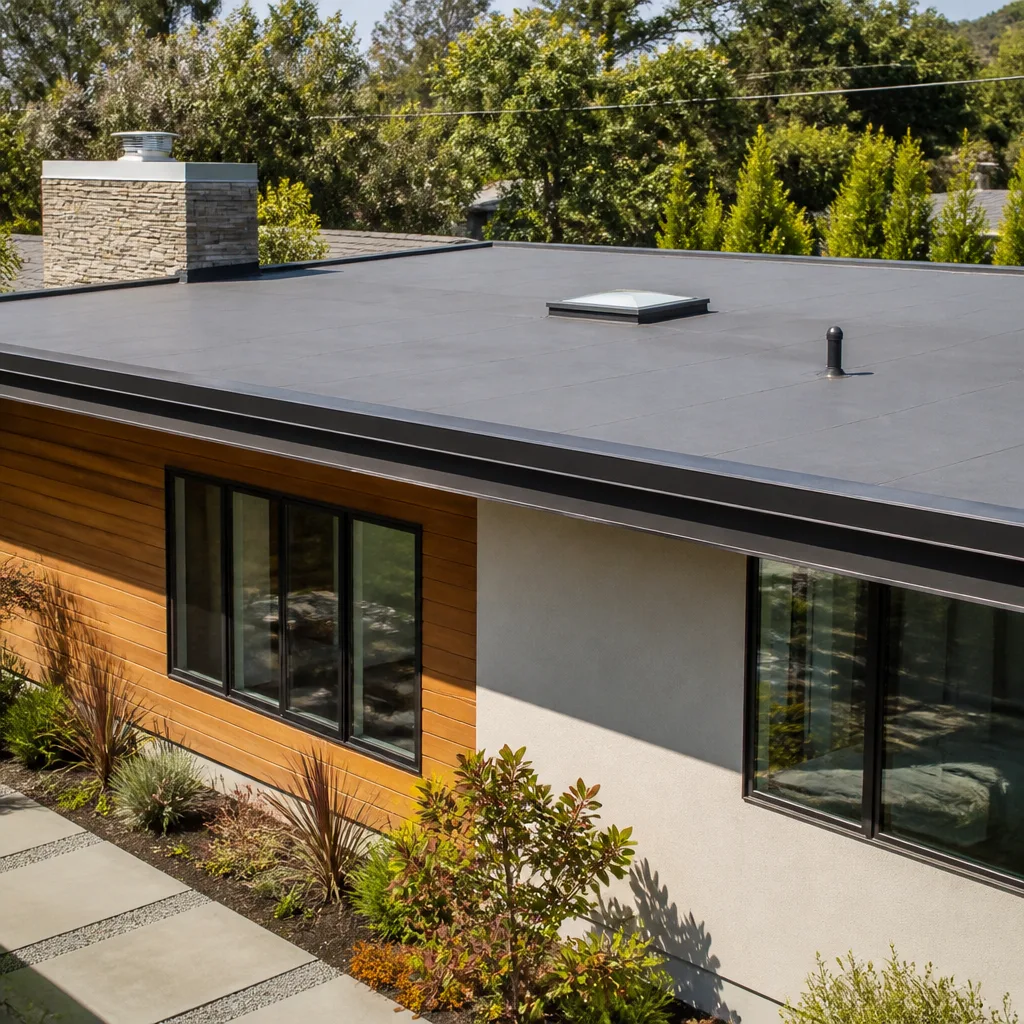
Flat roofs and low-slope roofs are common on mid-century homes in neighborhoods like Southland Park and Grandview Heights. These use scuppers and interior roof drains instead of gutters. The same rule applies: a blocked roof drain on a flat roof means standing water, and standing water means a leak within hours, not days. Check flat roof drains during the dry season when debris is dry and easier to remove.
What “Roof-Ready for Hurricane Season” Actually Means
We hear “roof-ready” thrown around a lot. Here’s what it actually means for a West Palm Beach home, specifically. It means four things are true before June 1st.
1. Penetrations are sealed. Every pipe boot, vent cap, skylight frame, and exhaust hood that penetrates the roof surface is a potential water entry point. The rubber seals and caulking around these degrade under UV. A roof-ready home has fresh sealant or replacement boots on every penetration, checked within the last 90 days.
2. Flashing is secured. Flashing is the metal material that transitions water at roof joints: valleys, chimneys, dormers, and where the roof meets a wall. In high wind, loose flashing catches air, peels back, and exposes the underlayment. During a hurricane, a single lifted piece of flashing can turn into a ten-foot section of peeled roof. Roof-ready means flashing is fastened and sealed.
3. You have a documented condition report. If you file an insurance claim after a storm, your insurer will want to know what the roof looked like before the storm. A written inspection report with photos, dated before the event, is your best evidence. This is one reason an annual roof inspection in West Palm Beach is so valuable: it creates a documented baseline.
4. Your insurance policy has been reviewed this calendar year. This is the step most homeowners skip. Florida homeowners insurance has changed significantly in recent years. Coverage terms, deductibles, and windstorm exclusions vary widely. A roof-ready home has a policy the homeowner actually understands. Know your hurricane deductible, your roof coverage type, and your replacement cost terms before you need to use them.
Afternoon Thunderstorms vs. Named Storms: Different Damage, Different Checks
Most roof damage in West Palm Beach doesn’t come from hurricanes. It comes from the daily afternoon thunderstorms that roll through from June through September. The damage profile is different, and so is the inspection protocol.
Afternoon thunderstorms produce intense, short-duration rainfall and occasional gusty microbursts. The damage they cause is water-driven: leaks at penetrations, water backing up under flashing, gutter overflow. The wind is usually not the main factor. After a severe thunderstorm, check for water intrusion inside first: water stains on ceilings, moisture around skylights, damp insulation in the attic. Then check outside for displaced shingles and gutter overflow marks on the fascia.
Named storms and hurricanes produce sustained wind and wind-driven rain from multiple directions. The damage is wind-driven: shingles peeled back, flashing lifted, ridge caps displaced, sometimes complete section loss. After a named storm passes within 100 miles of West Palm Beach, do a full walkaround. Look for anything that moved. If you see displaced material, take photos before touching anything. Then document, call your insurer, and get a professional assessment. Do not attempt repairs on a roof that has sustained wind damage without a professional inspection; the structural integrity may be compromised. If you’re unsure who to call, read How to Hire a Roofing Contractor in West Palm Beach: A Step-by-Step Guide.
The inspection protocol difference matters. A water-focused check after a thunderstorm is about finding leaks. A wind-focused check after a named storm is about finding what moved and documenting it for insurance.
The UV Problem: South Florida’s Quiet Roof Killer
Hurricanes get the headlines, but the sun is what quietly destroys roofs in West Palm Beach year-round. South Florida receives some of the most intense UV radiation in the continental United States. Sealants, rubber boots, plastic vent caps, and asphalt shingles all degrade faster here than they do in most of the country.
Our field techs have seen pipe boots that are brittle and cracked within five years of installation. Caulking around skylights and chimneys can turn chalky and pull away from the surface within two to three dry seasons. On flat and low-slope roofs, the roof membrane itself bakes under the sun, and the seams where membrane sheets join are the usual failure point.
That’s why material selection matters in South Florida. Some materials hold up under UV better than others. When we price a replacement, we walk through options from manufacturers like GAF and CertainTeed for shingle systems, or Owens Corning for certain underlayment and insulation components. The point isn’t the brand name; the point is that UV resistance and heat performance are the criteria that matter here, and not every product is equal in this climate.
The practical takeaway: make UV inspection part of your dry season check. Look at any exposed rubber, plastic, or caulking on the roof. If it’s cracked, chalky, or pulling away, replace it now, while the weather is dry. It’s a small-dollar fix that prevents a big-dollar leak.
What Seasonal Roof Work Costs in West Palm Beach
You shouldn’t have to call a roofer just to get a ballpark. Here’s what seasonal roof work typically costs in the West Palm Beach market, as of this writing.
Typical Price Ranges
- Annual roof inspection: $150 to $350, depending on roof size and access. Some companies offer free inspections as part of a maintenance relationship. At Brennan Roofing Co West Palm Beach, inspections are priced before we come out, and you get a written report.
- Gutter cleaning: $125 to $275 for a single-story home with typical linear feet. Add $75 to $150 for a second story.
- Resealing penetrations (pipe boots, vent caps): $15 to $45 per penetration for sealant; $85 to $200 per penetration for a replacement boot with labor, depending on accessibility.
- Flashing repair (one section): $250 to $700, depending on the type of flashing (valley, chimney, step) and how much material needs replacement.
- Shingle replacement (small area, 10-20 shingles): $200 to $500.
- Full roof replacement in West Palm Beach: $9,000 to $22,000, depending on roof size, pitch, material, and underlayment code requirements.
These are honest ranges, not quotes. Your roof’s specifics drive the final number. That’s why every Brennan Roofing job starts the same way: a written price, on paper, before any work starts. If you want an exact number for your roof, call (728) 203-3066 and ask for a free estimate.
One thing that should not cost extra is the follow-up. Every repair we do is covered by our 365-Day Done Right Promise: if a repair or installation fails within one year, we come back and make it right at no charge. That’s in writing, not a verbal assurance.
Common Mistakes to Avoid
- Waiting until June to schedule an inspection. By June, every roofer in West Palm Beach is booked. The window to act without competing against your neighbors is January through April.
- Ignoring small leaks during the dry season. A small water stain in January becomes a mold problem and a decking repair by August. Moisture that gets in during a dry month doesn’t stop working just because it’s not raining.
- Cleaning gutters only once a year. In West Palm Beach, palm fronds, oak leaves, and wind-blown debris accumulate year-round. Twice a year is the minimum for most homes, and more often if you have overhanging trees.
- Skipping the documentation step. If you don’t have a written condition report from before the storm, your insurance claim becomes a he-said-she-said argument. A dated inspection report with photos is the cheapest insurance you can buy.
- Using silicone caulk on roof penetrations without proper prep. Silicone doesn’t adhere to dirty or oxidized surfaces. It peels off within months. The right approach is cleaning, priming, and using a sealant rated for the specific material.
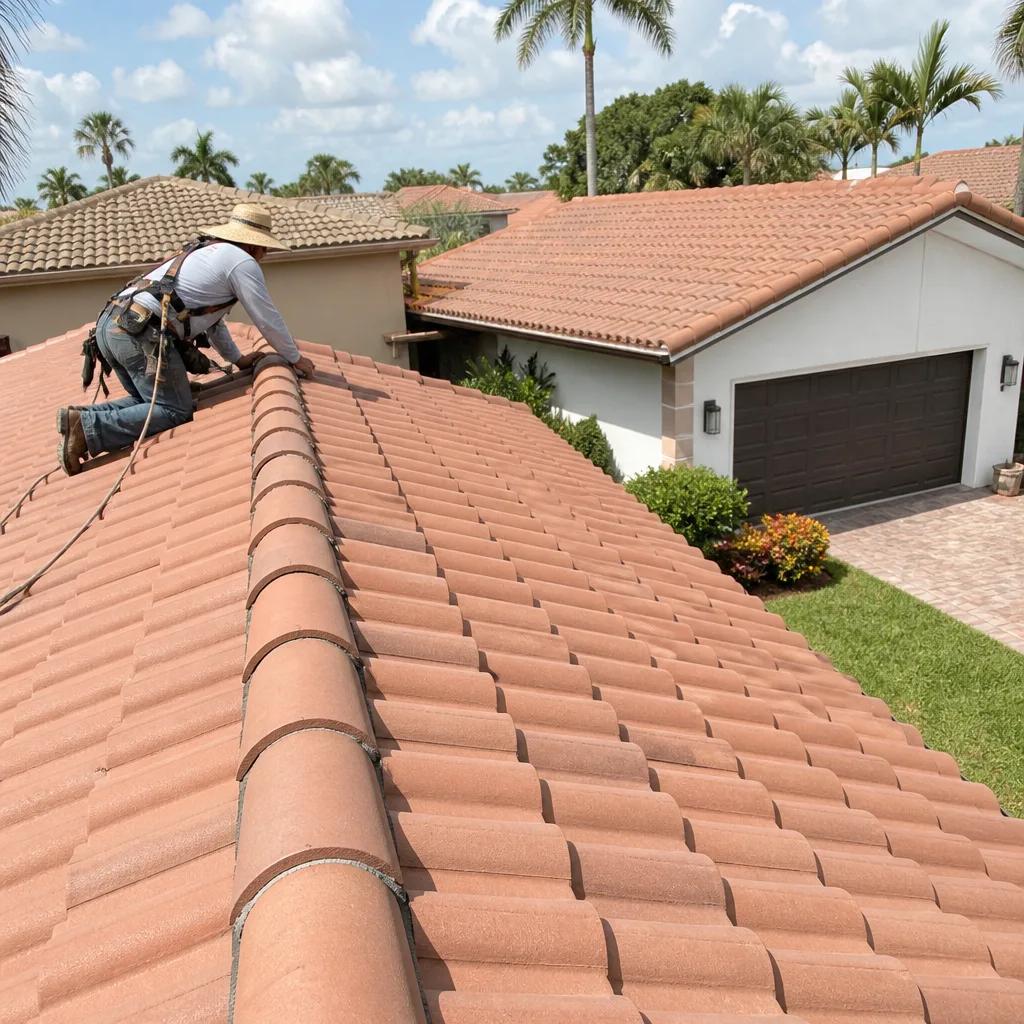
- Standing on a tile roof to check for damage. Concrete and clay tile crack under foot traffic. A visual check from the ground or from the eave is the right way; if you need to get on the roof, have a professional do it.
- Assuming insurance covers everything. Florida policies vary wildly on roof coverage, age limitations, and hurricane deductibles. Know what your policy says before you need it, not after.
When to Call a Professional
Some roofing tasks are homeowner-appropriate: visual inspections from the ground, clearing gutters on a single-story home with a stable ladder, checking for water stains inside. Others are not. See DIY vs Professional Roofing: The West Palm Beach Homeowner’s Decision Guide for a full breakdown. Call a professional when you see water intrusion you can’t trace, when shingles or flashing are visibly displaced after a storm, when you’re on a second story, when the roof is tile or steep-slope, or when you’re not comfortable on a ladder. Roof work involves heights and, in many cases, steep surfaces; a fall from even a single-story roof can be catastrophic. Our technicians are background-checked, uniformed, and trained to work on roofs safely every day. Brennan Roofing Co West Palm Beach offers free estimates in West Palm Beach, and every estimate starts with a written price before any work begins. Call (728) 203-3066 and you’ll speak with a live person, any time, day or night.
Frequently Asked Questions
Schedule your inspection between January and April, before hurricane season starts June 1st. This gives you time to complete any recommended repairs during the dry season, when weather conditions are most favorable and roofing crews are less backed up. Call (728) 203-3066 to book a West Palm Beach inspection; the price is in writing before we come out.
Twice per year is the minimum for most West Palm Beach homes. The first cleaning should be in January or February, during the dry season when debris is light and dry. The second should be in October or November, after the peak of hurricane season and before the winter dry months. Homes with heavy tree cover may need three or four cleanings.
A pre-season inspection checks four things: sealed penetrations (pipe boots, vent caps, skylights), secured flashing at every transition point, general surface condition including shingle wear and membrane seams, and proper drainage through gutters, scuppers, and roof drains. The inspector should provide a written report with photos. That report becomes your documented baseline if you need to file an insurance claim later.
That depends entirely on your insurance policy. Florida policies vary significantly on roof age, coverage type, and hurricane deductibles. Some policies have separate windstorm deductibles, often 2% to 5% of the dwelling coverage. The only way to know is to read your policy. Do this before hurricane season, not after a storm. If you need a professional condition report to support a claim, call (728) 203-3066 and ask about a documented inspection.
Small leak repairs typically run $200 to $700, depending on the source. Penetration resealing is the cheapest fix, usually $85 to $200 per penetration. Flashing repairs run $250 to $700 per section. If the leak has caused decking damage, the repair cost increases. Every Brennan Roofing repair comes with a written price before work starts and a one-year written guarantee through the roof repair in West Palm Beach process. Call (728) 203-3066 for an exact quote.
Yes, and you should, after every significant storm. From the ground you can see missing shingles, lifted flashing, displaced ridge caps, and debris accumulation. What you cannot see from the ground are seal failures around penetrations, cracked pipe boots, and early membrane wear on flat roofs. That requires an on-roof inspection by a professional. A ground-level check is a supplement to, not a replacement for, an annual professional inspection. Browse more guides & resources to keep your roof in top condition year-round.
The Bottom Line
West Palm Beach roofing care is not complicated, but it is time-sensitive. The entire year comes down to this: act during the dry season, monitor during the wet season. January through April is your window for inspections, repairs, gutter work, and documentation. June through November is your window for monitoring and responding to whatever the storms do. If you do the dry season work every year, the wet season surprises become small and manageable instead of emergencies. The homeowners who treat roof care as a seasonal routine, not a reaction to problems, are the ones who never get surprised by a leak in August. Start with an inspection. Get everything in writing. And if you need help, our Brennan Roofing Co West Palm Beach home team is at (728) 203-3066.
Written by Travis Oakley, Owner at Brennan Roofing Co West Palm Beach, serving West Palm Beach since 2000.
See the difference
 Before
 After
After Before
 After
After Before
 After
After